
Adam Hamilton is asking a question Sen. Roger Marshall should have to answer at every Kansas farm gate: who pays when Washington raises the price of imported tools, fertilizer and household goods? The Democrat's affordability plan says sweeping tariffs land on Kansas farmers, manufacturers and families. He wants congressional approval before new tariffs take effect and a public estimate of their cost.
That would move the decision out of a single president's announcement and into a recorded vote. Hamilton notes that Republican Sen. Jerry Moran joined a bipartisan trade-review proposal, evidence that requiring Congress to examine tariffs is not a demand invented by one party. Marshall still has to explain his own position on the costs his constituents face.
Rep. Sharice Davids visited a Kansas aerospace manufacturer whose president described rapid price changes even though most materials came from U.S. suppliers. The company said some contracts fix prices for a year while costs for tools and aluminum move underneath them. That is the real-world squeeze behind Hamilton's argument: a tariff can hit a Kansas shop before it appears in any political victory speech.
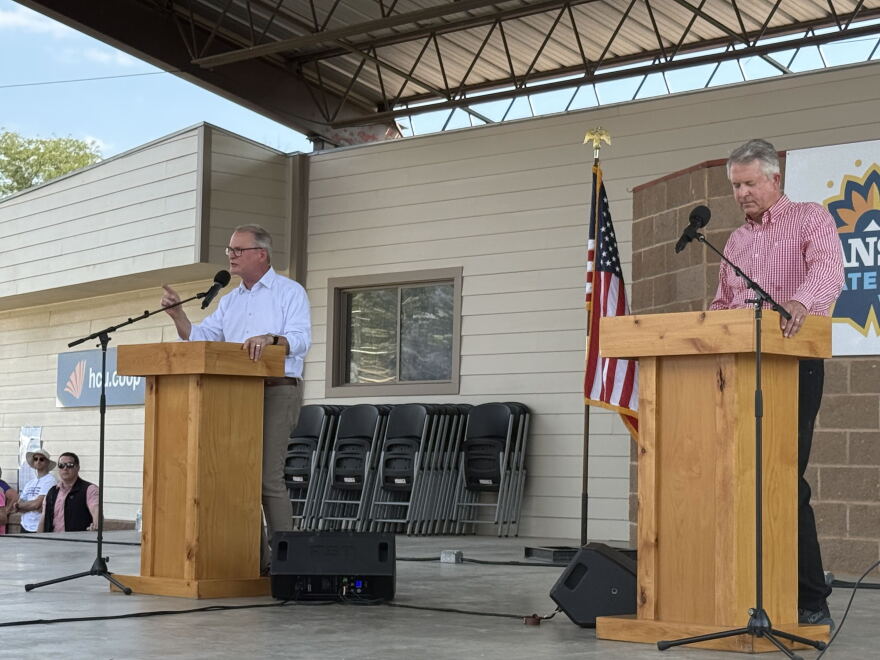
The trade debate has more than one legitimate goal. The United States can challenge unfair foreign practices and protect strategic industries. Hamilton's proposal asks whether the chosen tool is worth its price to Kansans. The Kansas State Fair debate put that disagreement between the candidates in front of voters.
Hamilton's campaign says the Constitution gives Congress responsibility over trade and promises to require lawmakers to own these decisions. That is still a proposal. It would have to pass Congress, and a public cost estimate would not by itself stop a tariff. But it would make hiding the bill harder.
A tariff is easiest to sell when the person delivering the speech does not have to price farm equipment or restock a store. Hamilton is translating national trade rhetoric into the transactions Kansas voters know. He is not promising that every imported product should be free of duties; he is demanding evidence that a particular duty is worth the cost it imposes here. Marshall's support for Trump's approach gives voters a clear contrast. One candidate treats the tariff as leverage; the other asks to see the Kansas invoice.
Trump can call a tariff tough. A farmer buying equipment and a family buying groceries are the ones asked to finance that toughness. Hamilton is making the Senate race a referendum on whether Kansas gets a vote before the next bill arrives.